Rio Grande Valley
South Texas Bird Species
52 specialty and notable species of the Rio Grande Valley and South Texas coast. Photos via Wikimedia Commons — see full photo credits. Bird call recordings via Xeno-canto (CC licensed).
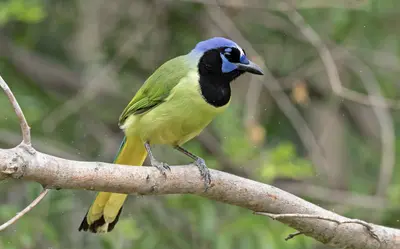
Green Jay
Cyanocorax yncas
ResidentHabitat Thornscrub, riparian woodland
One of the most sought-after birds in the U.S., found nowhere north of the Rio Grande Valley. Unmistakable with its bright green, blue, and yellow plumage; visits feeders readily.
Rec. Leonardo Ordóñez-Delgado · CC BY-NC-ND 4.0
Found at
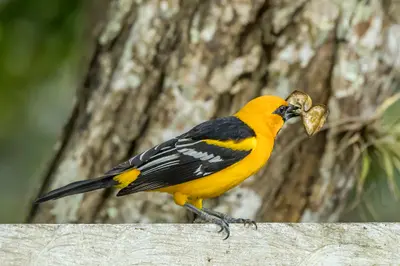
Altamira Oriole
Icterus gularis
ResidentHabitat Riparian forest, shade trees
The largest oriole in the U.S., this brilliant orange-and-black bird weaves a distinctive foot-long hanging nest. A reliable feeder visitor at Bentsen SP and Santa Ana NWR.
Rec. Étienne Leroy · CC BY-NC-SA 4.0
Found at
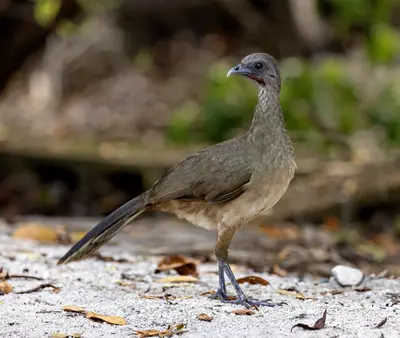
Plain Chachalaca
Ortalis vetula
ResidentHabitat Dense brush, woodland edges
The only member of its tropical family found in the U.S. Groups erupt into deafening choruses at dawn. Commonly seen at feeders throughout the Valley.
Rec. Max Noack · CC BY-NC-SA 4.0
Found at
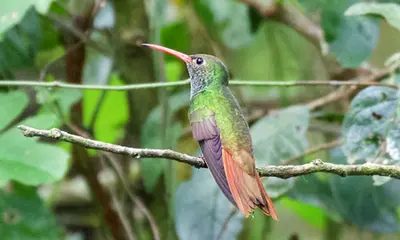
Buff-bellied Hummingbird
Amazilia yucatanensis
ResidentHabitat Woodland edges, gardens
The only hummingbird that regularly breeds in South Texas, identified by its red bill and rufous tail. Unique among U.S. hummingbirds in moving northward after breeding season.
Rec. Manuel Grosselet · CC BY-NC-SA 4.0
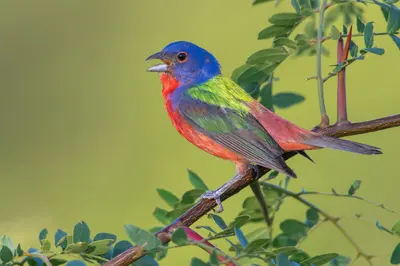
Painted Bunting
Passerina ciris
Winter visitor / migrantHabitat Brushy edges, weedy fields, gardens
The male is arguably the most colorful bird in North America — a mosaic of red, blue, and green. Winters in South Texas in good numbers and visits feeders offering millet.
Rec. Sue Riffe · CC BY-NC-SA 4.0
Found at
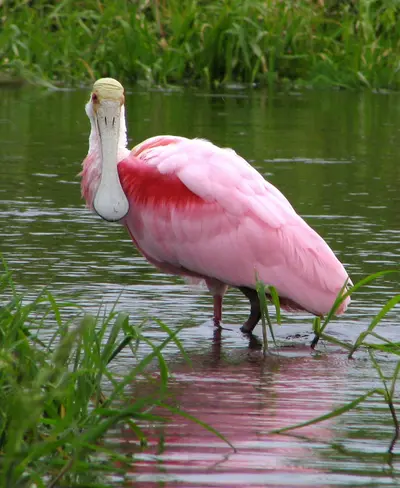
Roseate Spoonbill
Platalea ajaja
ResidentHabitat Shallow coastal bays, resacas, wetlands
A shocking splash of flamingo-pink in the Texas wetlands. Feeds by sweeping its spoon-shaped bill side to side through shallow water. Nests colonially along the coast.
Rec. Manuel Grosselet · CC BY-NC-SA 4.0
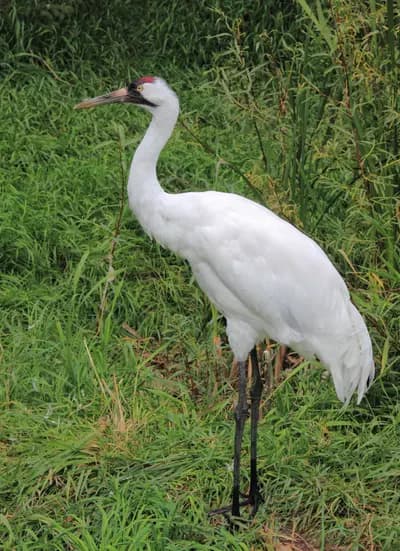
Whooping Crane
Grus americana
Winter visitorHabitat Salt marshes, tidal flats
North America's tallest bird and one of conservation's greatest comeback stories. The entire wild flock winters at Aransas NWR; best viewed from guided boat tours out of Rockport.
Rec. Sue Riffe · CC BY-NC-SA 4.0
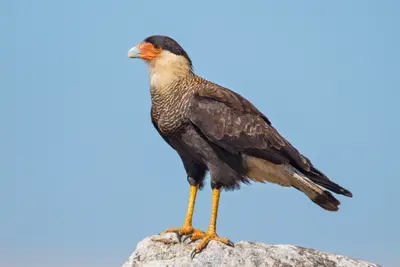
Crested Caracara
Caracara plancus
ResidentHabitat Open pastures, brushlands, roadsides
A bold, long-legged falcon of open country with a striking black-and-white pattern and bright orange face. Often seen walking on the ground or perched on fence posts and utility poles.
Rec. JAYRSON ARAUJO DE OLIVEIRA · CC BY-NC-SA 4.0
Found at
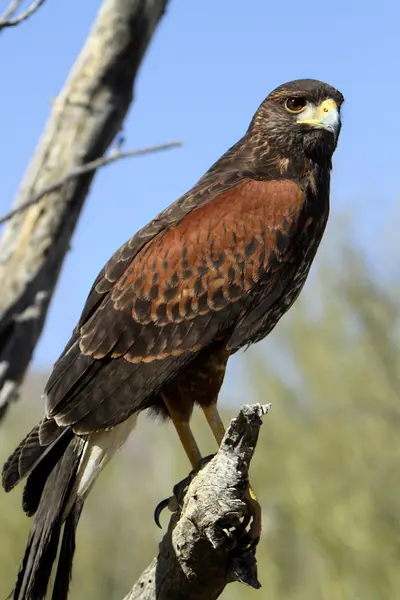
Harris's Hawk
Parabuteo unicinctus
ResidentHabitat Brushy desert, thornscrub, open woodland
The only hawk in the world known to hunt cooperatively in family groups. Rich chestnut shoulders and thighs contrast with a dark body; a common and charismatic sight across South Texas.
Rec. Franco Vushurovich · CC BY-NC-SA 4.0
Found at
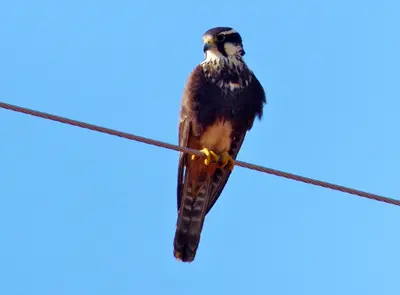
Aplomado Falcon
Falco femoralis
Resident (reintroduced)Habitat Open coastal prairie, brushy flats
Once extirpated from the U.S., reintroduced at Laguna Atascosa NWR starting in the 1990s. Slender and elegant, with a bold facial pattern; one of the great conservation success stories.
Rec. Fernando Fávaro · CC BY-NC-ND 2.5
Found at
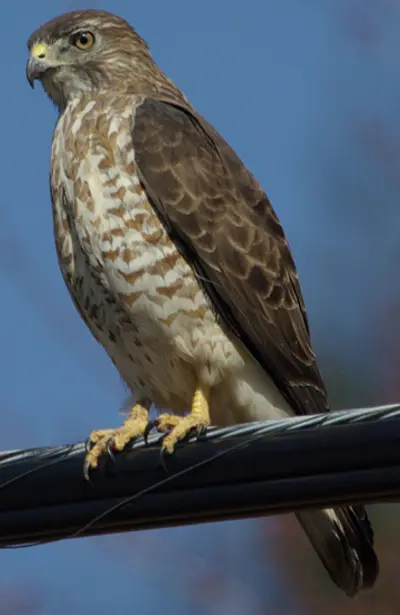
Broad-winged Hawk
Buteo platypterus
MigrantHabitat Woodland, open skies during migration
Unremarkable for most of the year, but in September the skies above Hazel Bazemore County Park fill with hundreds of thousands streaming south — one of birding's great spectacles.
Rec. Denis Dujardin · CC BY-NC-SA 4.0
Found at
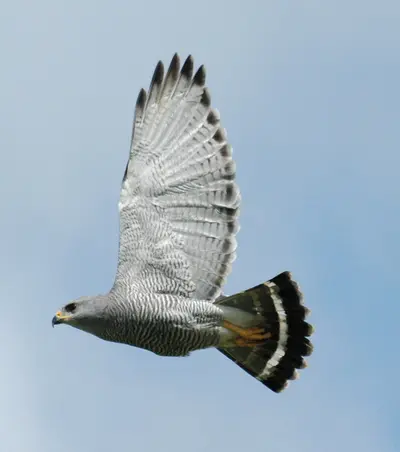
Gray Hawk
Buteo plagiatus
ResidentHabitat Riparian woodland along the Rio Grande
A finely gray-barred hawk of the river corridor, reaching the northern edge of its range in the Rio Grande Valley. Its loud, drawn-out call is a characteristic sound of the riparian zone.
Rec. Richard E. Webster · CC BY-NC-SA 4.0
Found at
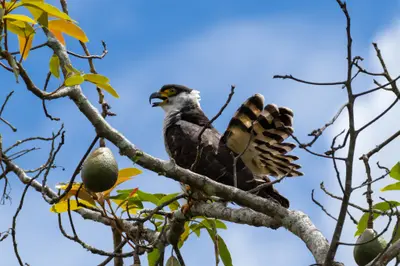
Hook-billed Kite
Chondrohierax uncinatus
Rare residentHabitat Riparian forest
One of the rarest regularly occurring raptors in the U.S., best looked for soaring over the riparian forest from the hawk watch platform at Bentsen-Rio Grande SP.
Rec. Manuel Sánchez-Nivicela · CC BY-NC-ND 4.0
Found at
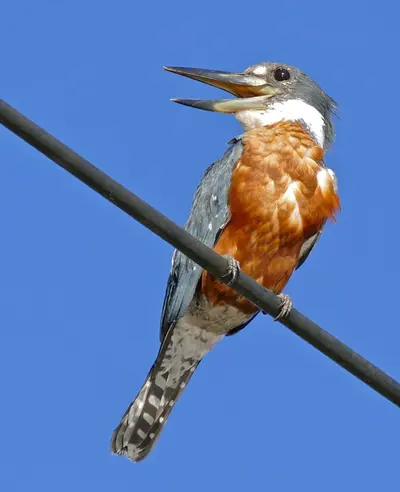
Ringed Kingfisher
Megaceryle torquata
ResidentHabitat Rivers, resacas, large water bodies
The largest kingfisher in the Americas, barely reaching the U.S. in South Texas. A noisy, rattling presence along the Rio Grande and its oxbow lakes; much larger than the familiar Belted Kingfisher.
Rec. JAYRSON ARAUJO DE OLIVEIRA · CC BY-NC-SA 4.0
Found at
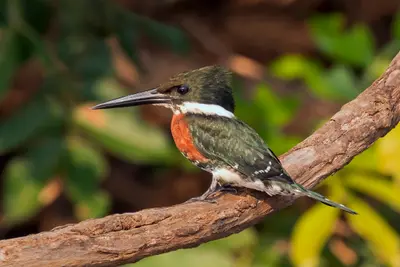
Green Kingfisher
Chloroceryle americana
ResidentHabitat Clear streams, resacas, irrigation channels
The smallest of the three kingfisher species in the Valley, barely larger than a sparrow. A secretive gem that perches low over clear water, diving for tiny fish.
Rec. Jacob Wijpkema · CC BY-NC-SA 4.0
Found at
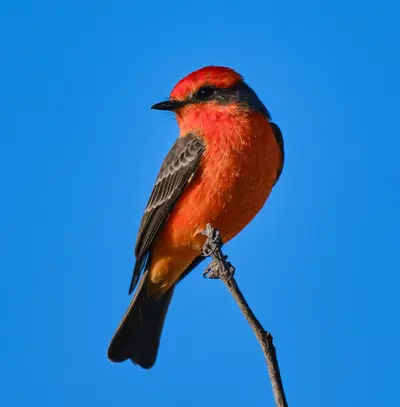
Vermilion Flycatcher
Pyrocephalus rubinus
Resident / winter visitorHabitat Open areas near water, parks, brushy fields
The male's blazing red crown and breast make it one of the most eye-catching birds in Texas. Perches conspicuously on exposed branches and wire fences while hunting insects.
Rec. María Emilia Pérez · CC BY-NC-SA 4.0
Found at
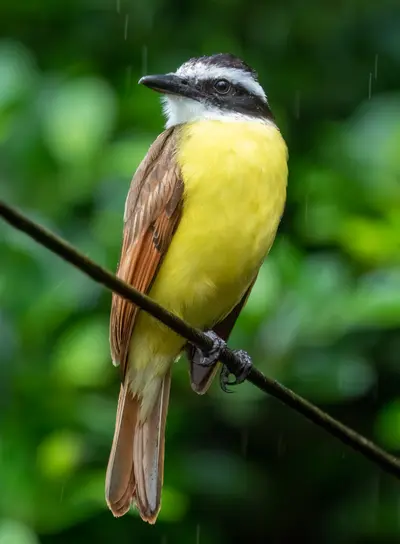
Great Kiskadee
Pitangus sulphuratus
ResidentHabitat Open woodland, resacas, gardens
Loud, bold, and almost impossible to miss: this yellow-bellied flycatcher announces itself constantly with its namesake "KISS-ka-dee" call. One of the most conspicuous birds in any RGV park.
Rec. Frank Lambert · CC BY-NC-ND 4.0
Found at
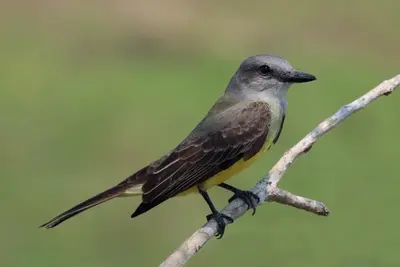
Tropical Kingbird
Tyrannus melancholicus
Uncommon residentHabitat Open areas near water, woodland edges
Nearly identical to the more common Couch's Kingbird — the call (a rapid, twittering pip) is the safest way to tell them apart. Look for a notched rather than forked tail.
Rec. Manuel Sánchez-Nivicela · CC BY-NC-ND 4.0
Found at
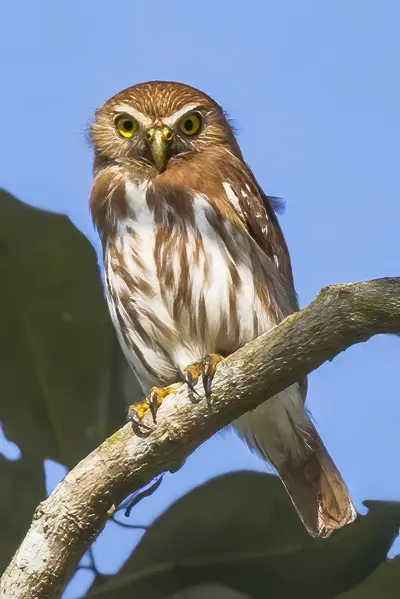
Ferruginous Pygmy-Owl
Glaucidium brasilianum
ResidentHabitat Dense thornscrub, woodland
Tiny but ferocious, this diurnal owl is a prized find in the Valley's dense brush. It often responds to imitations of its whistle, and draws in scolding songbirds.
Rec. Franciel da Silva Lima · CC BY-NC-ND 4.0
Found at
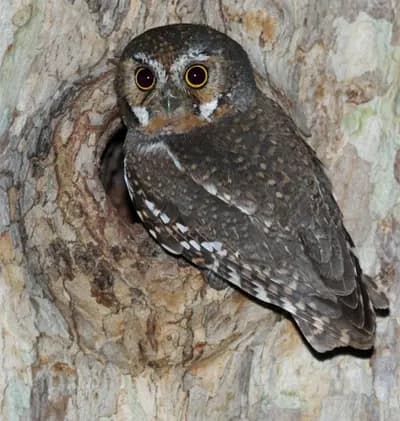
Elf Owl
Micrathene whitneyi
Summer residentHabitat Riparian woodland, thornscrub
The world's smallest owl by weight, barely larger than a sparrow. Arrives in spring to nest in old woodpecker cavities; its puppy-like yipping calls reveal it at dusk along the Rio Grande.
Rec. Paul Marvin · CC BY-NC-SA 4.0
Found at
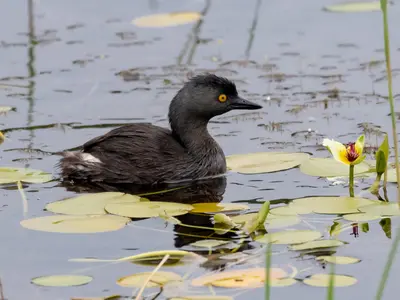
Least Grebe
Tachybaptus dominicus
ResidentHabitat Ponds, resacas, slow streams
The smallest grebe in the Western Hemisphere, barely larger than a tennis ball. Common on resacas and ponds throughout the Valley; golden eyes give it a surprisingly intense expression.
Rec. Manuel Grosselet · CC BY-NC-SA 4.0
Found at
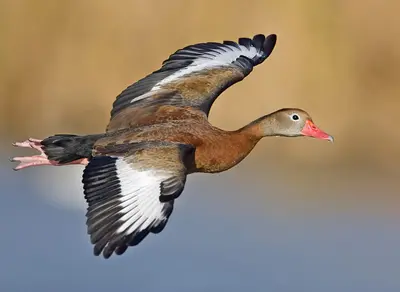
Black-bellied Whistling-Duck
Dendrocygna autumnalis
ResidentHabitat Ponds, resacas, flooded fields
A colorful, long-necked duck with a candy-orange bill that has dramatically expanded its range into Texas. Often seen in large flocks perched in trees or grazing in grassy fields.
Rec. Leonardo Guzman Hernandez · CC BY-NC-SA 4.0
Found at
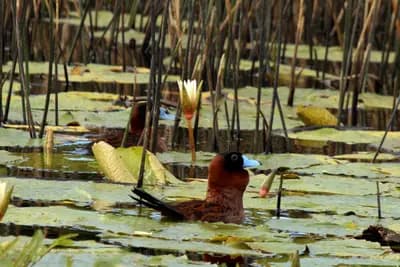
Masked Duck
Nomonyx dominicus
Rare residentHabitat Densely vegetated ponds and resacas
One of the most sought-after rarities in Texas, lurking in thick emergent vegetation. Estero Llano Grande SP is perhaps the most reliable site in the U.S. for this otherwise secretive stiff-tail.
Rec. Fernando Igor de Godoy · CC BY-NC-SA 4.0
Found at
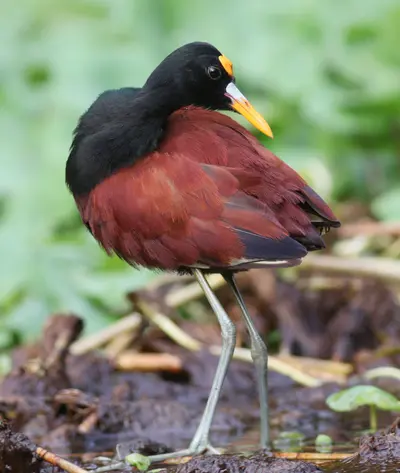
Northern Jacana
Jacana spinosa
Rare residentHabitat Floating vegetation on ponds and resacas
Walks on floating lily pads on absurdly long toes, earning the nickname "lily-trotter." A tropical species that barely reaches the U.S.; Estero Llano Grande SP is the most consistent spot.
Rec. Homero Bennet · CC BY-NC-SA 4.0
Found at
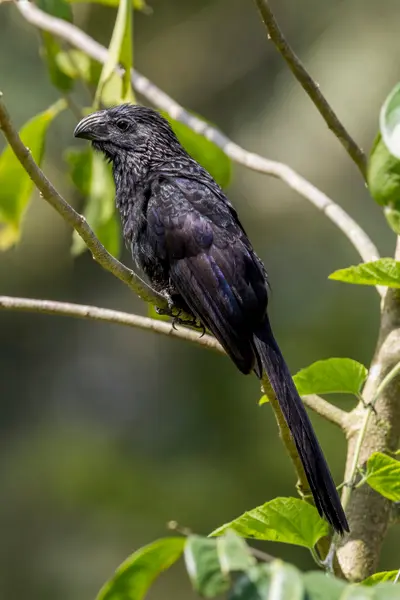
Groove-billed Ani
Crotophaga sulcirostris
Summer residentHabitat Brushy fields, woodland edges, pastures
A gangly, all-black cuckoo with a bizarre grooved bill and a loose, floppy flight. Moves through low brush in noisy, cooperative family groups; becomes scarce in the Valley by late fall.
Rec. Étienne Leroy · CC BY-NC-SA 4.0
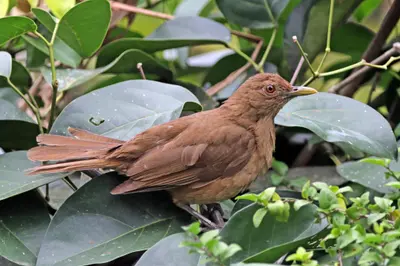
Clay-colored Thrush
Turdus grayi
Rare residentHabitat Dense riparian thickets, shaded gardens
The national bird of Costa Rica barely reaches the U.S. in South Texas. Plain brown but a superb singer; a few pairs have established in the Valley, most reliably at Bentsen SP.
Rec. Bill Pyle · CC BY-NC-SA 4.0
Found at
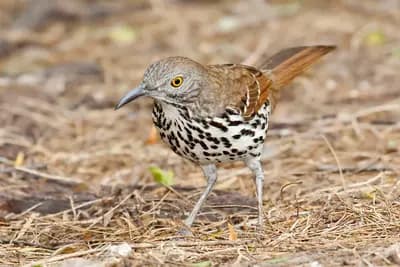
Long-billed Thrasher
Toxostoma longirostre
ResidentHabitat Dense thornscrub, brushy woodland
A South Texas endemic with a strongly curved bill and rich, varied song. Skulky but vocal; sings persistently from within dense brush in spring and can be drawn to the open with patience.
Rec. Joren van Schie · CC BY-NC-SA 4.0
Found at
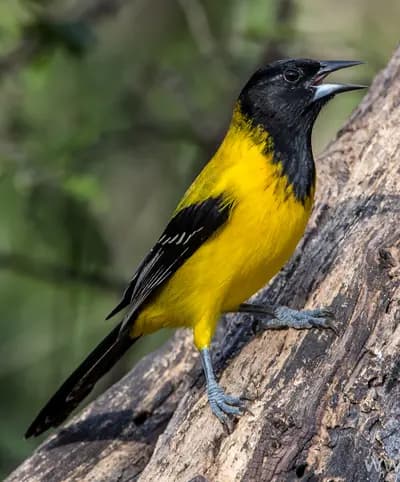
Audubon's Oriole
Icterus graduacauda
ResidentHabitat Dense thornscrub, riparian thickets
A secretive oriole with a black hood and bright yellow body that rarely ventures to feeders. Heard more often than seen; its rich, slow whistles carry through the brush at Bentsen SP.
Rec. Manuel Grosselet · CC BY-NC-SA 4.0
Found at
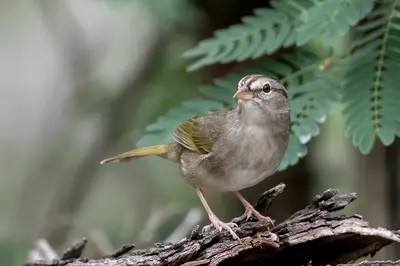
Olive Sparrow
Arremonops rufivirgatus
ResidentHabitat Dense thornscrub undergrowth
A drab but characteristic bird of the Valley's dense brush, rarely venturing far from cover. Its dry, accelerating trill is a background sound of any thornscrub walk — but seeing one takes patience.
Rec. Manuel Grosselet · CC BY-NC-SA 4.0
Found at
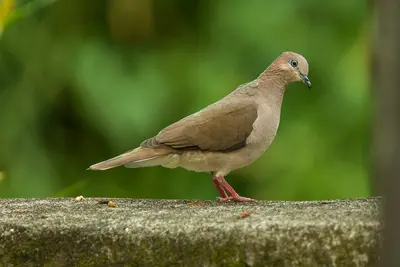
White-tipped Dove
Leptotila verreauxi
ResidentHabitat Dense thornscrub, shaded woodland floor
A plump, ground-hugging dove that walks beneath feeders at Valley nature centers. Its low, hollow hoot — like blowing across the top of a bottle — is one of the signature sounds of the RGV.
Rec. Frank Lambert · CC BY-NC-ND 4.0
Found at
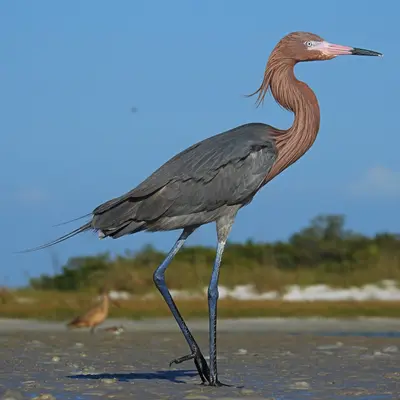
Reddish Egret
Egretta rufescens
ResidentHabitat Coastal bays, tidal flats, salt lagoons
Among the rarest herons in North America and a Texas coastal specialty. Feeds with a spectacular lunging, wing-spreading display — sprinting and spinning to startle fish into the open. Occurs in both a dark morph and a scarce white morph.
Rec. Isain Contreras Rodríguez · CC BY-NC-SA 4.0
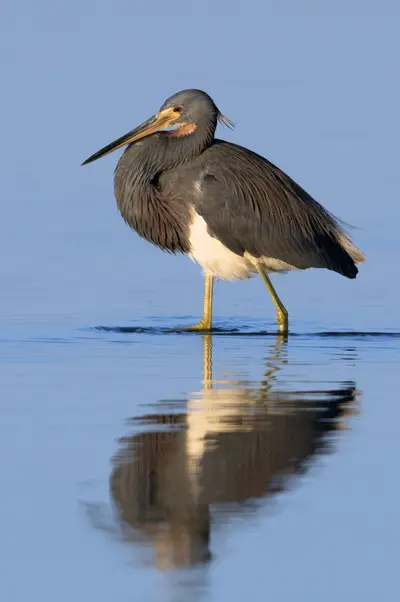
Tricolored Heron
Egretta tricolor
ResidentHabitat Coastal marshes, estuaries, resacas
The only U.S. heron with a white belly contrasting sharply against slate-blue upperparts. An agile, fast-running forager that chases prey at a sprint rather than stalking. Common in coastal marshes and tidal flats from Corpus Christi south.
Rec. Paul Driver · CC BY-NC-SA 4.0
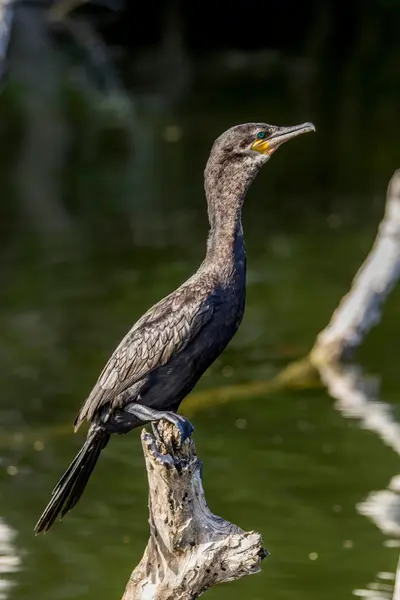
Neotropic Cormorant
Nannopterum brasilianum
ResidentHabitat Resacas, ponds, rivers, coastal bays
Smaller and longer-tailed than the familiar Double-crested Cormorant, identified by its tan facial skin bordered in white. Abundant at Estero Llano Grande and other Valley resacas; often nests colonially in the same trees as herons and spoonbills.
Rec. Guillermo Treboux · CC BY-NC-SA 4.0
Found at
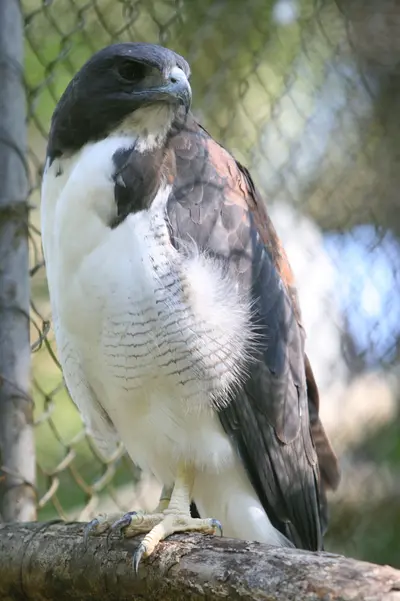
White-tailed Hawk
Geranoaetus albicaudatus
ResidentHabitat Coastal prairie, open brushland
A large, striking raptor found in the U.S. only in South Texas. Adults show clean white underparts, rusty shoulder patches, and a white tail with a single narrow black band. Perches prominently on utility poles and fenceposts across the open prairies between Corpus Christi and the coast.
Rec. JAYRSON ARAUJO DE OLIVEIRA · CC BY-NC-SA 4.0
Found at
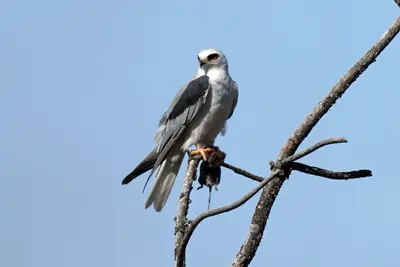
White-tailed Kite
Elanus leucurus
ResidentHabitat Open grasslands, agricultural fields, roadsides
A ghostly white kite that hunts by hovering in place over open fields — a behavior unique among North American raptors. Black shoulder patches and red eyes give the perched bird a striking look. Often seen on roadsides and near farm fields wherever rodents are plentiful.
Rec. José María Loaiza B. · CC BY-NC-SA 4.0
Found at
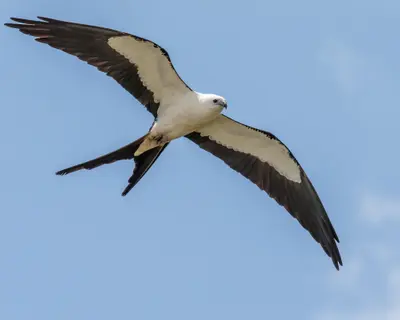
Swallow-tailed Kite
Elanoides forficatus
MigrantHabitat Open sky, woodland edges, river corridors
Arguably the most graceful bird in North America. Migrates through South Texas in spring and fall, often in loose groups, effortlessly banking on its impossibly long forked tail. Watch overhead at Valley hotspots from late April through May and again in August.
Rec. Mateus Gonçalves Santos · CC BY-NC-SA 4.0
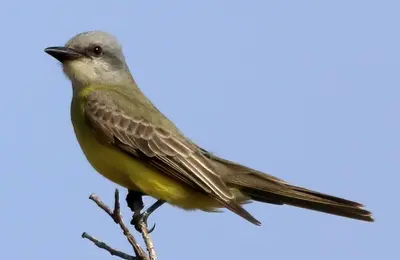
Couch's Kingbird
Tyrannus couchii
ResidentHabitat Woodland edges, roadsides, towns, parks
The default large yellow kingbird of the Rio Grande Valley — nearly identical to the Tropical Kingbird but told by its slightly thicker, forked tail and distinctive call: a rolling, nasal breeeer. Found in almost any park, garden, or open area in the Valley.
Rec. Manuel Grosselet · CC BY-NC-SA 4.0
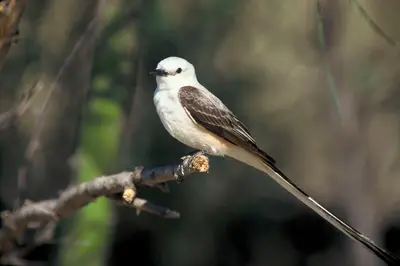
Scissor-tailed Flycatcher
Tyrannus forficatus
Summer residentHabitat Open country, pastures, roadsides, fencelines
One of the most eye-catching birds in Texas: a pale gray flycatcher with salmon-pink sides and an extraordinary forked tail that can exceed its own body length. Arrives in spring and is conspicuous on utility wires throughout South Texas. The state bird of Oklahoma.
Rec. Terry Davis · CC BY-NC-SA 4.0
Found at
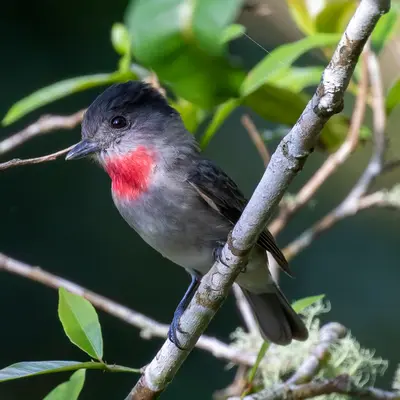
Rose-throated Becard
Pachyramphus aglaiae
Rare residentHabitat Riparian forest, dense riverside growth
One of the most sought-after rarities in the Rio Grande Valley, barely reaching the U.S. The male's rose-pink throat is stunning against its gray plumage. Builds a large, shaggy ball-shaped nest of grass and plant fiber hanging from a branch tip — the nest is often easier to spot than the bird.
Rec. Max Noack · CC BY-NC-SA 4.0
Found at
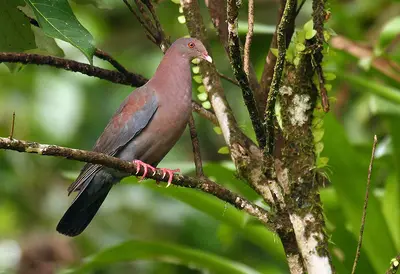
Red-billed Pigeon
Patagioenas flavirostris
ResidentHabitat Riparian forest along the Rio Grande
A large, dark wine-colored pigeon of the river corridor that barely reaches the U.S. in South Texas. Most reliably seen flying over the Rio Grande at dawn from Bentsen SP's hawk watch platform. Its deep, resonant cooing fills the riparian mornings before most other birds have warmed up.
Rec. Richard E. Webster · CC BY-NC-SA 4.0
Found at
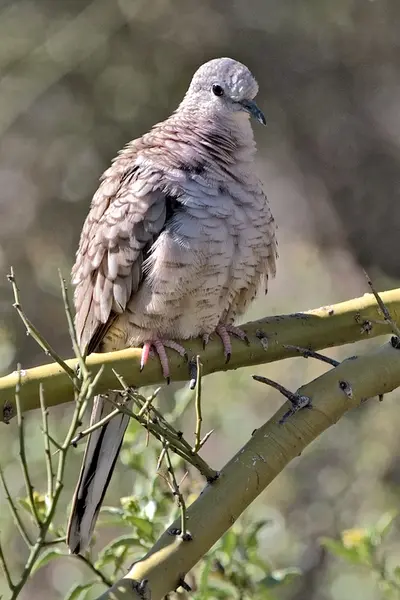
Inca Dove
Columbina inca
ResidentHabitat Urban parks, gardens, roadsides, feeders
A small, intricately scaly dove of towns and gardens, immediately identified by its squeaky two-note no hope call and the bright rufous wing flash in flight. One of the most common birds at feeders and picnic areas throughout the Valley — easy to overlook, but charming on close inspection.
Rec. Manuel Grosselet · CC BY-NC-SA 4.0
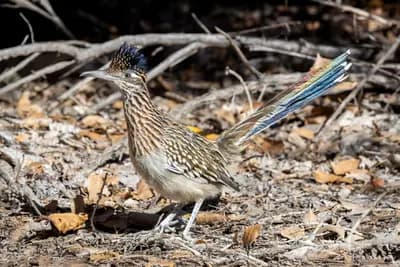
Greater Roadrunner
Geococcyx californianus
ResidentHabitat Thornscrub, brushy desert, roadsides
The iconic ground-dwelling cuckoo of the Southwest — a fast, fearless predator that takes lizards, snakes, scorpions, and even small birds. More often heard (a series of descending, mournful coos) than seen sprinting across the road. Encountered throughout thornscrub habitats across South Texas.
Rec. Mark McClelland · CC BY-NC-SA 4.0
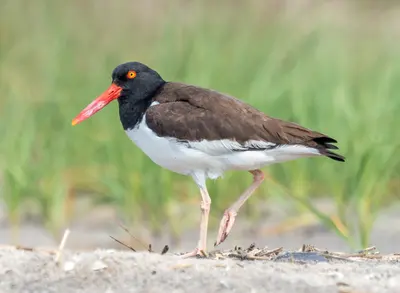
American Oystercatcher
Haematopus palliatus
ResidentHabitat Sandy beaches, shell reefs, tidal flats
Unmistakable with its bold black-and-white plumage, massive orange-red bill, and far-carrying piping calls. Pries open oysters and mussels by stabbing its laterally flattened bill into the shell gap. Resident along the Texas coast; the barrier island beaches south of Corpus Christi hold good numbers.
Rec. William Whitehead · CC BY-NC-SA 4.0
Found at
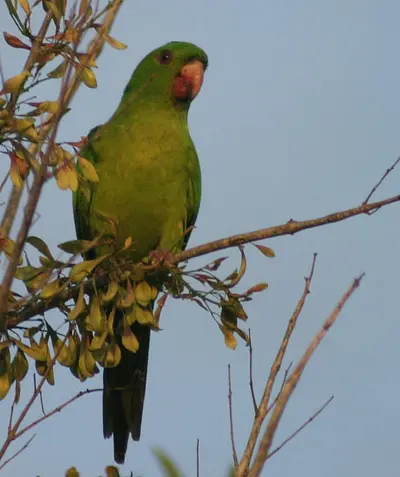
Green Parakeet
Psittacara holochlorus
Resident (naturalized)Habitat Urban trees, palm groves, parks
A naturalized population descended from escaped cage birds has established throughout the lower Rio Grande Valley, especially around McAllen. Noisy flocks roost communally in city trees and announce themselves with loud screeching. Considered one of the two naturally-occurring wild parakeets in the continental U.S.
Rec. Manuel Grosselet · CC BY-NC-SA 4.0
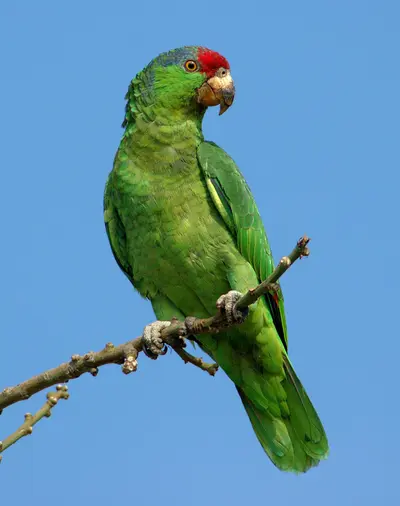
Red-crowned Parrot
Amazona viridigenalis
Resident (naturalized)Habitat Urban neighborhoods, palm trees, orchards
A charismatic bright-green parrot with a scarlet crown established in Brownsville and McAllen. Paradoxically, the feral Texas population now rivals or exceeds the remaining wild birds in Mexico — making the RGV an unexpected stronghold for this critically endangered species.
Rec. Manuel Grosselet · CC BY-NC-SA 4.0
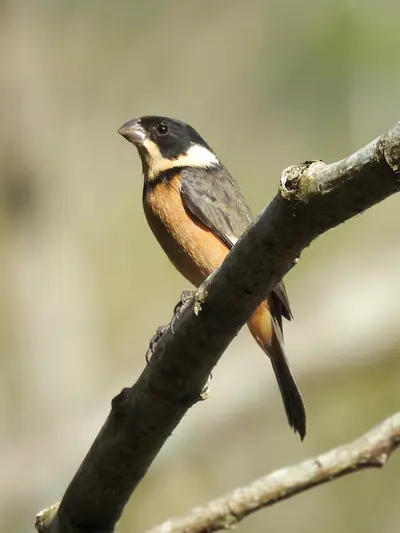
White-collared Seedeater
Sporophila morelleti
Rare residentHabitat Weedy fields, Carrizo cane, tall grass near the Rio Grande
One of the most sought-after birds on the U.S. list, found only in a narrow stretch along the Rio Grande near Zapata. A tiny, round finch — the male striking in black and white — that lurks in tall weeds and cane. Patient visitors stake out known sites at dawn for the best chance.
Rec. Bobby Wilcox · CC BY-NC-SA 4.0
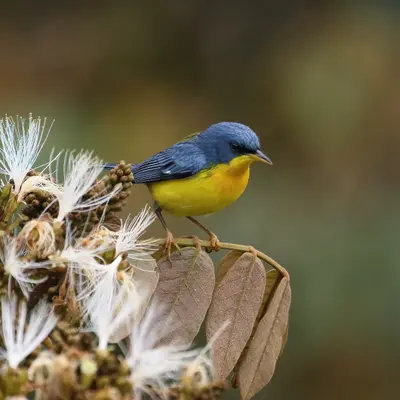
Tropical Parula
Setophaga pitiayumi
Rare residentHabitat Spanish moss-draped oaks, riparian forest
A tiny warbler nearly identical to the Northern Parula but lacking the dark breast band. Rare but regular in the Valley; closely tied to Spanish moss, which it uses as nesting material. Most reliably found at Bentsen SP and Santa Ana NWR in late spring and summer.
Rec. Marcos E. Sosa · CC BY-NC-SA 4.0
Found at
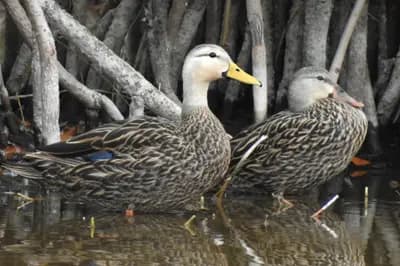
Mottled Duck
Anas fulvigula
ResidentHabitat Coastal marshes, prairie ponds, bays
The only dabbling duck that breeds year-round along the Gulf Coast. It closely resembles a Mallard but has a bright yellow bill and darker, unmarked plumage; hybridization with feral Mallards is an ongoing conservation concern. Common in coastal marshes from Corpus Christi south.
Rec. Paul Marvin · CC BY-NC-SA 4.0
Found at
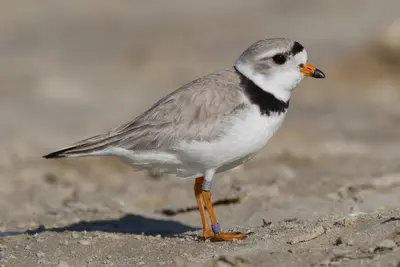
Piping Plover
Charadrius melodus
Winter visitorHabitat Sandy beaches, tidal flats, shell reefs
One of North America's most endangered shorebirds, but the Texas coast winters a significant share of the global population. Small and pale as dry sand, it blends into the beach almost perfectly. Padre Island National Seashore and the barrier islands of the Coastal Bend are among the most important wintering sites in the country.
Rec. William Whitehead · CC BY-NC-ND 4.0
Found at
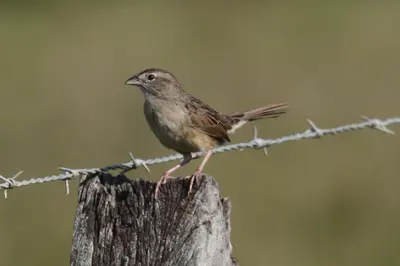
Botteri's Sparrow
Peucaea botterii
Summer residentHabitat Coastal tallgrass prairie, weedy fields
A nondescript sparrow that arrives in summer specifically to breed in Tamaulipan coastal grasslands. Nearly impossible to find without its song — a series of chips and trills that accelerates into a distinctive bouncing-ball rattle. The Sabal Palm Sanctuary near Brownsville is a reliable site.
Rec. Manuel Grosselet · CC BY-NC-SA 4.0
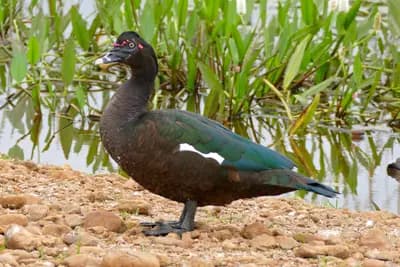
Muscovy Duck
Cairina moschata
Rare residentHabitat Rio Grande riverbanks and backwaters
Not the warty barnyard bird of city parks — the true wild Muscovy Duck barely reaches the U.S. along the Rio Grande, dark and iridescent with a bold white wing patch. Salineño is by far the most reliable U.S. site, best scanned from the riverbank at dawn.
Found at
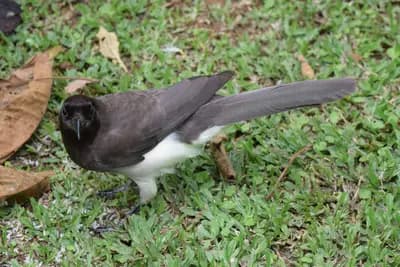
Brown Jay
Cyanocorax morio
Historical / vagrantHabitat Riparian forest along the Rio Grande (historical)
Once a reliable specialty of the Salineño/Falcon Dam stretch of the river, regular sightings faded through the 2010s and the species is now effectively absent from the U.S. Any record today is exceptional — this is a former specialty to know about, not a bird to plan a trip around.
Found at