Rio Grande Valley · Winter Visitor & Migrant
Painted Bunting
Passerina ciris · Colorín sietecolores
Winter visitor / migrant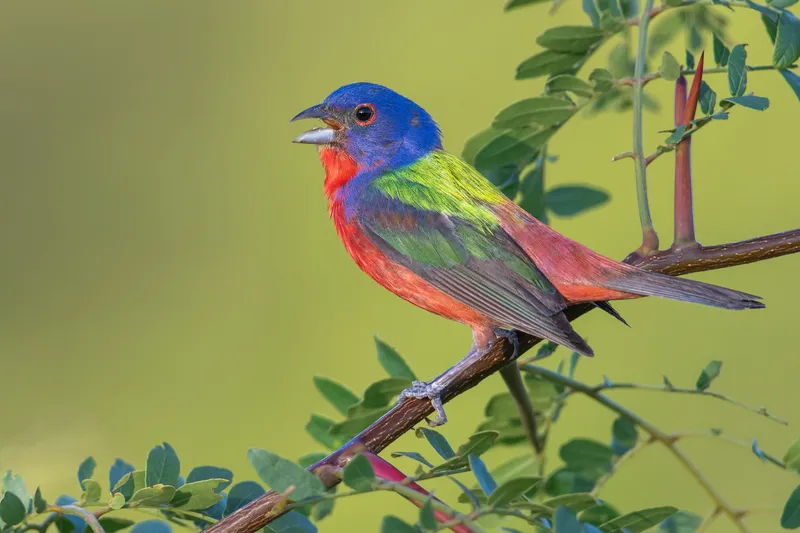
Photo: Wikimedia Commons
Overview
The male Painted Bunting is, by almost universal agreement, the most colorful bird in North America — a dazzling mosaic of cobalt blue on the head, brilliant scarlet on the breast and belly, and lime green on the back that seems almost too vivid to be real. South Texas hosts significant numbers of wintering birds and is crossed by migrating individuals in spring and fall, making the Rio Grande Valley one of the most reliable places in the country to see one. The female, in contrast, is a pure bright green — subtle by bunting standards, but among the greenest small birds on the continent.
Identification
The adult male is unmistakable: cobalt-blue head, brilliant red underparts, and lime-green back. No other North American songbird combines these three colors. The female and immature birds are uniform bright green above, paler yellowish-green below — much greener than most female songbirds, which helps separate them from similarly plain warblers and vireos. First-year males can show a patchy intermediate plumage with blotches of adult color.
Size is small — about 14 cm (5.5 in) — compact and thick-billed for a songbird. The stout finch-like bill, useful for cracking seeds, separates it from warblers and vireos of similar size. Painted Buntings visit feeders stocked with white millet, making them one of the more reliable feeder birds in winter at Valley nature centers.
Habitat & Range
Painted Buntings breed in two separate populations: one on the southern Great Plains (Texas, Oklahoma, Kansas) and another along the southeastern Atlantic coast. South Texas lies on the wintering and migratory route for the western Great Plains population, which winters in Mexico and Central America. Wintering birds in South Texas favor dense brushy edges, weedy fields, and gardens.
Spring migrants pass through March through May, and some birds linger into early June at South Padre Island and other coastal stops. Fall migration is less conspicuous. Wintering birds are typically present from October through March.
Behavior & Diet
Primarily a seed eater: grass seeds, weed seeds, and white millet at feeders dominate the winter diet. Insects are added in the breeding season for protein. Buntings move through low vegetation and ground cover methodically, often in small flocks with other sparrows and buntings in winter.
Males on the breeding grounds are highly territorial and aggressive toward rival males; fights are fierce and occasionally fatal. The male's song is a sweet, high-pitched warble delivered persistently from a prominent perch during the breeding season.
Where to See in South Texas
Best Time to See
October through March for wintering birds at feeders in the Rio Grande Valley — Quinta Mazatlán, Estero Llano Grande, and Santa Ana NWR all maintain millet feeders that reliably draw Painted Buntings. Late April through mid-May for spring migration: South Padre Island is the premier site for Trans-Gulf fallout events, when hundreds of exhausted buntings arrive after crossing the Gulf of Mexico. The peak window at South Padre is approximately April 20 – May 10.
Conservation Status
IUCN: Least ConcernDespite Least Concern status, the western population has shown significant long-term declines. Primary threats include illegal capture for the cage-bird trade in wintering areas in Mexico and Central America, habitat loss on both breeding and wintering grounds, and window collisions during migration.
Fun Fact
Male Painted Buntings can take nearly two years to acquire their brilliant adult plumage — first-year males resemble females and must wait until their second winter molt to show full color. This delayed plumage development may help young males avoid aggression from older, dominant males during their first breeding season.
In the News